Food is more than sustenance—it’s a story of culture, history, and creativity served on every plate. If you’re here, you’re likely looking to deepen your understanding of global flavors, explore the roots behind iconic dishes, and discover practical ways to elevate your cooking at home. This article delivers exactly that: a guided exploration of culinary pulse, food traditions, and smart kitchen strategies that make authentic flavors accessible in any kitchen.
We’ve carefully researched culinary traditions, cross-referenced cultural sources, and drawn on established food science principles to ensure every insight is both accurate and practical. From unpacking the foundations of global cuisine to sharing time-saving kitchen hacks and healthier recipe adaptations, you’ll gain knowledge you can trust and techniques you can use immediately.
Whether you’re refining family recipes or experimenting with new flavors, this guide is designed to expand your culinary confidence and inspire your next dish.
Reimagine Your Plate: Simple Swaps for Delicious, Healthy Meals*
Healthy eating doesn’t mean choking down dry salads (we’ve all been there). It means smart swaps that protect flavor while improving nutrition. Think of it as an upgrade, not a punishment.
Here’s how to start tonight:
- Swap white rice for quinoa or brown rice for extra fiber and protein.
- Replace sour cream with Greek yogurt—same tang, more protein.
- Use mashed avocado instead of mayo for heart-healthy fats.
These healthier recipe adaptations keep your favorite meals recognizable and satisfying. When you focus on balance—texture, seasoning, and freshness—you won’t miss the “original” at all.
Mastering Fats & Oils: The Flavor-Forward, Healthy Approach
FATS aren’t the enemy—CONFUSION is. Let’s simplify.
The Creamy Swap
Mayonnaise is mostly processed oil. Swapping it for mashed avocado or Greek yogurt upgrades both flavor and nutrition. Healthy fats (like the monounsaturated fats in avocado) support heart health (American Heart Association). Greek yogurt adds probiotics—beneficial bacteria that support gut health. Think creamy chicken salad, but brighter and tangier (and no mystery oils).
Smarter Sautéing
Not all oils behave the same under heat. The smoke point is the temperature where oil starts to burn and break down. Olive oil (~375–410°F) and avocado oil (~500°F) outperform many vegetable oil blends in stability and nutrients. Butter burns faster due to milk solids. Translation: better flavor, fewer degraded compounds.
- Choose extra virgin olive oil for medium heat.
- Use avocado oil for high-heat searing.
- Avoid vague “vegetable oil” blends.
Baking Reimagined
Replace butter or oil with unsweetened applesauce, mashed banana, or pumpkin puree using a 1:1 ratio. This keeps moisture while lowering saturated fat. Bonus: added fiber and vitamins (USDA data). It’s banana bread that actually leans into the banana.
Nutrient-Dense Dressings
Blend tahini or nuts into vinaigrettes for fiber, protein, and healthy fats—without bottled additives.
Use healthier recipe adaptations in the section once exactly as it is given
Rethinking Carbs: How to Boost Fiber and Lower Glycemic Load
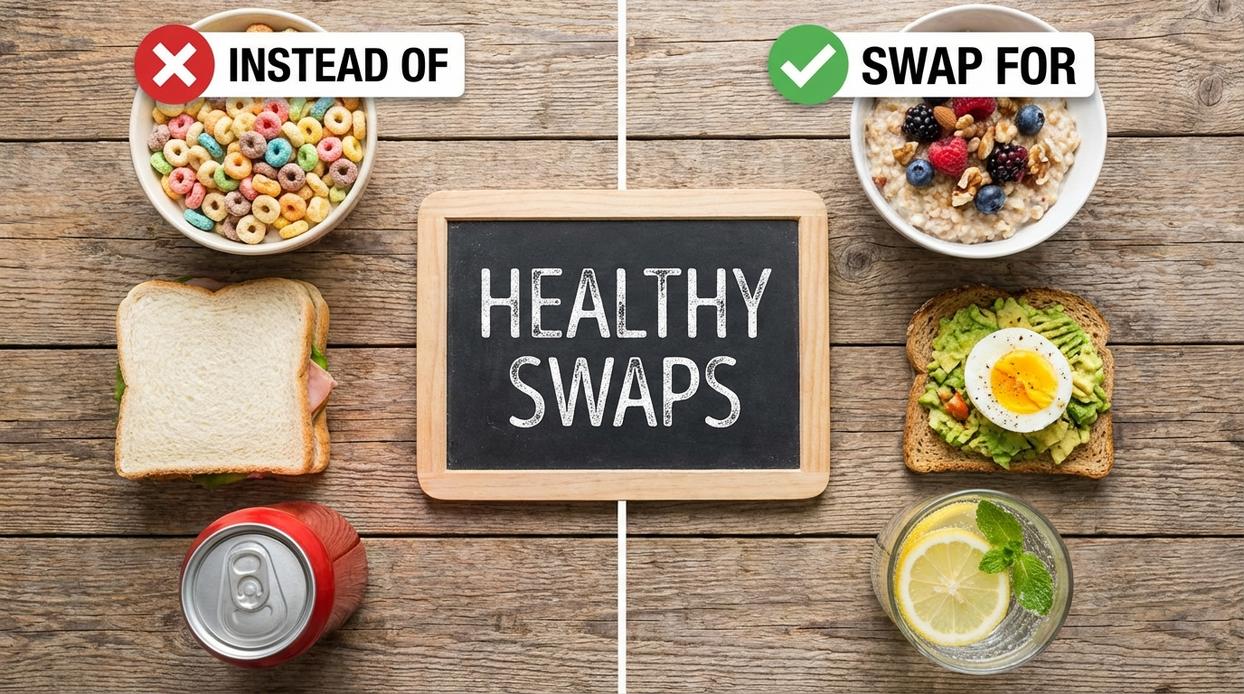
Carbs aren’t the villain of your plate—but refined carbs might be. The key is improving quality, not declaring war on bread.
The Whole-Grain Upgrade
Swap white flour for whole wheat, spelt, or oat flour in pancakes and muffins. Whole grains retain the bran and germ, which contain fiber and micronutrients. Higher fiber intake improves digestion and increases satiety (fullness), helping regulate appetite. In fact, research published in The Lancet found that people who consume 25–29 grams of fiber daily reduce their risk of cardiovascular disease by up to 30%.
If you’re exploring healthier recipe adaptations, this guide on how to convert traditional recipes into gluten free versions pairs well with whole-grain swaps.
Vegetable Noodles & Rice
Zucchini “zoodles” or cauliflower rice lower glycemic load—the measure of how quickly food raises blood sugar. Compared to white rice, cauliflower contains about 75% fewer calories per cup (USDA data). (Your spiralizer might just become your new favorite gadget.)
Beyond the Potato
Mashed cauliflower or butternut squash delivers vitamin C and beta-carotene with fewer rapidly absorbed carbs.
Legume Power
Replace half the ground meat in tacos with lentils or black beans. Legumes provide plant protein and resistant starch, which supports gut health and steadier blood sugar levels (Harvard T.H. Chan School of Public Health).
The Sweet Spot: Satisfying Cravings with Natural Sugar Alternatives
Cravings happen. The trick isn’t eliminating sweetness altogether—it’s choosing smarter sources and using healthier recipe adaptations that actually work in real life.
Start with Whole Fruit
First, rethink how you sweeten everyday staples. Instead of adding white sugar to oatmeal or yogurt, blend soaked dates into a smooth paste (dates are naturally high in fructose and fiber) and stir in a spoonful. Likewise, mashed berries or unsweetened applesauce add moisture and sweetness to muffins and quick breads. For example, swap 1 cup of sugar in a recipe with ¾ cup date paste and reduce other liquids slightly. The result? Balanced sweetness without the crash.
Spice It Up
Next, cut the sugar in your recipe by half. Then layer in cinnamon, nutmeg, cardamom, or pure vanilla extract. These spices enhance perceived sweetness by stimulating aroma receptors (flavor is mostly smell, after all). Think of it as turning up the flavor volume instead of the sugar dial.
Choose Smarter Syrups
When liquid sweetener is essential, use small amounts of pure maple syrup or raw honey instead of corn syrup. They contain trace minerals and antioxidants (though still use sparingly).
The Dark Chocolate Advantage
Finally, swap milk chocolate chips for dark chocolate (70% cacao or higher). You’ll cut sugar and gain flavonoids, plant compounds linked to heart health (Harvard Health, 2020). Sweet tooth satisfied—no sugar overload required.
Leaner Proteins & Plant-Based Power
Choosing leaner cuts is one of the simplest upgrades you can make in the kitchen. Swap ground beef for ground turkey or chicken in burgers and meatballs to reduce saturated fat while keeping protein high. Worried about dryness? Add grated onion or zucchini to the mix—they release moisture as they cook, creating tender, juicy results (and sneaking in vegetables doesn’t hurt).
Some argue beef simply tastes better. Fair. But texture and seasoning do heavy lifting. When seasoned well, lean poultry delivers flavor without the heaviness.
For a plant-forward option, try a burger built from mushrooms, walnuts, and black beans. Mushrooms provide umami (that savory depth you crave), walnuts add richness, and black beans supply fiber for fullness. It’s hearty, satisfying, and lower in saturated fat.
Rethink dairy, too. Nutritional yeast—a deactivated yeast with a naturally cheesy flavor—works beautifully in sauces or sprinkled over popcorn. Replace heavy cream in soups with blended white beans or soaked cashews for velvety texture without excess saturated fat. Use healthier recipe adaptations in the section once exactly as it is given.
Finally, incorporate fatty fish like salmon or mackerel weekly. They’re rich in omega-3 fatty acids, linked to heart health (Harvard T.H. Chan School of Public Health), and deliver high-quality protein with bold flavor.
Your healthier kitchen starts now.
We’ve shown you how simple, powerful swaps can transform favorite dishes without sacrificing flavor. No more choosing between comfort food and feeling good—this is your “have your cake and eat it” moment, like a Rocky-style training montage in your kitchen.
Instead, focus on adding fiber, nutrients, and bold flavor while dialing back processed ingredients. Use healthier recipe adaptations in the section once exactly as it is given.
Then, pick one swap and try it tonight. After all, small changes create habits. Pro tip: start with sauces—they deliver impact. Delicious, sustainable cooking awaits today.
Bring More Flavor and Confidence Into Your Kitchen
You came here looking to deepen your understanding of culinary pulse, global food fundamentals, and the rich traditions behind Hinga flavors. Now you have the insights to explore cultural cuisines with more intention, experiment with bold ingredients, and apply smarter techniques in your own kitchen.
Cooking can feel overwhelming—too many recipes, too many trends, and not enough clarity on what truly works. That frustration ends when you focus on fundamentals, embrace authentic flavors, and use simple kitchen hacks that make every dish more approachable. Even small shifts, like incorporating healthier recipe adaptations, can transform the way you cook and eat without sacrificing taste.
Now it’s your move. Start by choosing one new global flavor to experiment with this week. Apply a single kitchen hack you learned. Explore more guides that break down traditions and techniques into practical, usable steps.
If you’re ready to cook with more confidence, creativity, and cultural depth, dive into more expert-backed insights and start transforming your meals today. The right knowledge turns everyday cooking into something extraordinary—take that next step now.