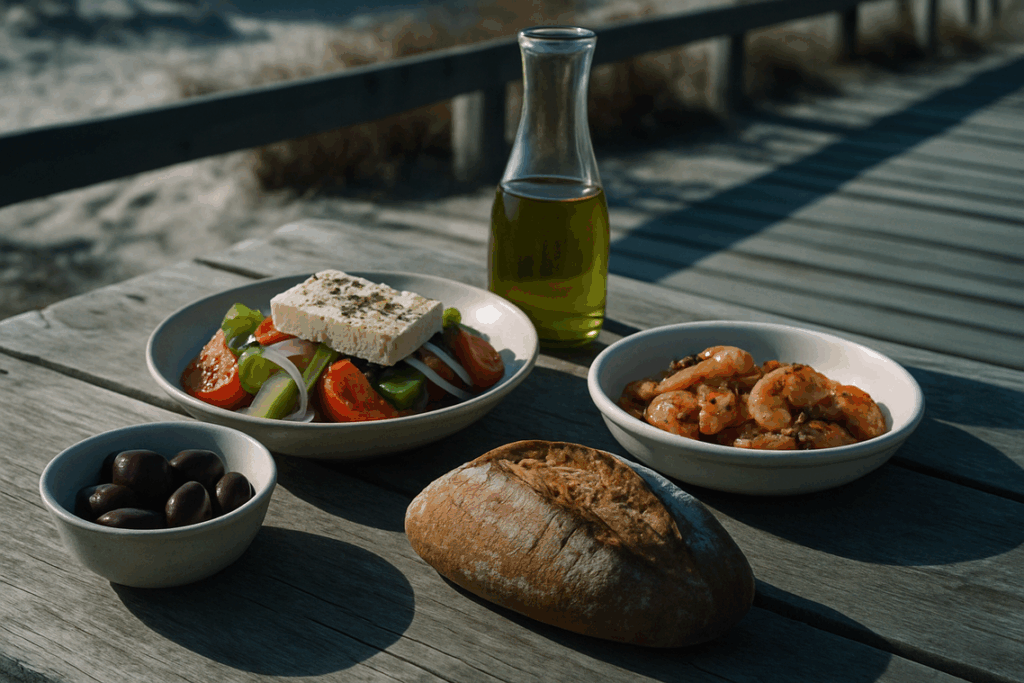
Food is more than sustenance—it’s a story of migration, memory, and mastery passed from one kitchen to another. If you’re here, you’re likely looking to better understand culinary pulse, explore cultural cuisines more deeply, and discover how global pantry staples shape the flavors we love. This article is designed to do exactly that: break down essential ingredients, highlight the traditions behind them, and share practical kitchen hacks that make global cooking approachable.
We’ve drawn from culinary research, cross-cultural food studies, and time-tested kitchen practices to ensure the insights you’ll find here are accurate, relevant, and rooted in real-world cooking experience. Whether you’re expanding your home menu or refining your understanding of Hinga flavors and food fundamentals, you’ll gain clear, actionable knowledge to elevate your skills and appreciation for global cuisine.
Your Pantry’s Passport: Unlocking a World of Flavor
One spoonful of smoked paprika can turn plain roast potatoes into a Spanish tapas moment. Yet many home cooks feel stuck, choosing salt and pepper over the unknown. Familiar A vs unfamiliar B feels safe—but safe can be bland.
Instead, start small with global pantry staples that deliver impact without drama. For example:
- Miso vs salt: deeper umami, same simple stir.
- Tahini vs cream: nutty richness, less heaviness.
- Fish sauce vs soy sauce: brighter savoriness, subtler sweetness.
This guide offers practical tips for confident everyday cooking with ease.
The Heart of Asia: Umami, Funk, and Aromatic Spice
Three Ingredients That Changed My Cooking Forever
The first time I stirred gochujang into melted butter, I nearly ruined dinner—or so I thought. I brushed it over roasted carrots, expecting chaos. Instead, I got balance: heat, sweetness, and a savory depth that felt restaurant-level (cue my shocked silence at the oven).
Gochujang, a Korean fermented chili paste, delivers what chefs call umami—that deeply savory “fifth taste” beyond sweet, sour, salty, and bitter. Its fermented complexity comes from aged soybeans and chilies. Some argue it’s too sweet for serious cooking. However, that subtle sweetness is precisely why it caramelizes beautifully on vegetables or transforms mayonnaise into a sandwich spread that tastes like you tried much harder than you did.
Then there’s miso paste, fermented soybean paste from Japan. It’s salty, rich, and layered. I once added a teaspoon to a basic tomato sauce; no one detected miso, yet everyone asked why it tasted fuller. Critics say miso makes dishes overly salty. In reality, used sparingly, it builds a savory backbone without overpowering.
Finally, fish sauce—Southeast Asia’s liquid gold. Yes, it smells funky (fermented anchovies will do that). But in soups or marinades, it replaces salt with something far more dynamic. A few drops turn simple meals into global pantry staples worth repeating.
Start small. Taste as you go. Suddenly, your kitchen feels a lot bigger.
Mediterranean Sun: Oils, Herbs, and Concentrated Flavor
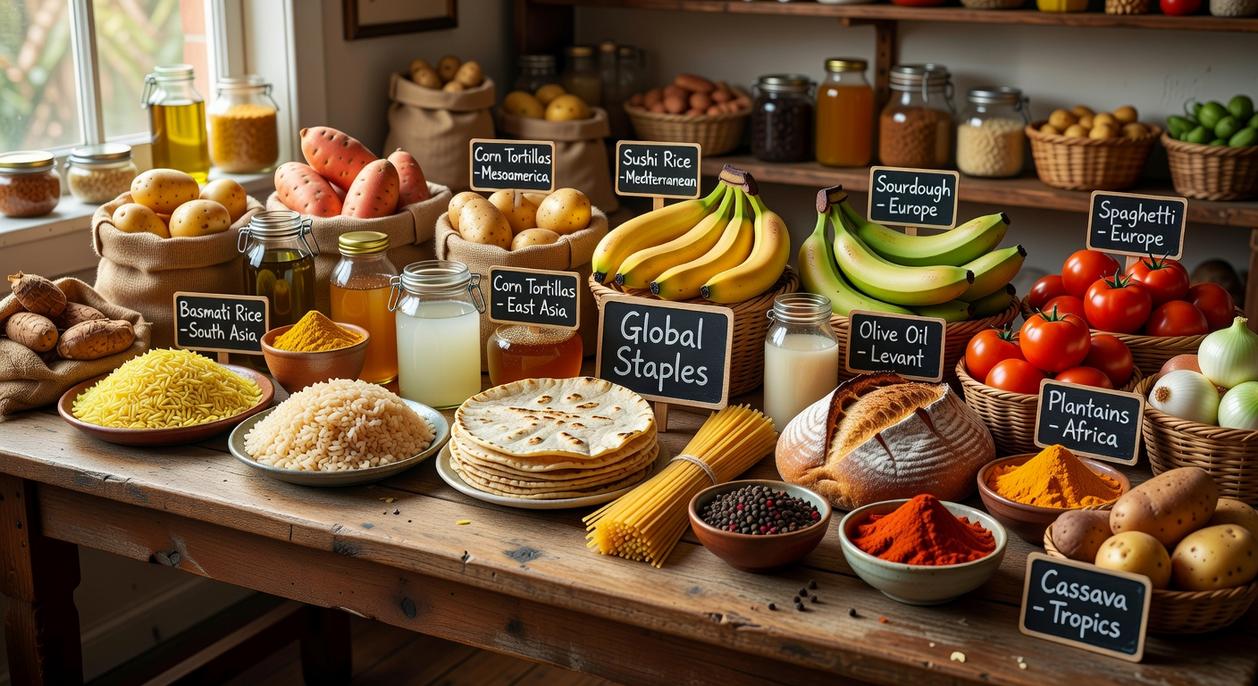
I still remember the first time I tasted truly good olive oil. I was standing in a friend’s tiny kitchen, tearing into warm bread, when she said, “Don’t cook with this—finish with it.” She poured a grassy, peppery extra virgin olive oil into a shallow bowl, and that drizzle changed how I understood fat forever.
High-Quality Extra Virgin Olive Oil (Finishing Oil)
Flavor Profile: Fruity, peppery, grassy.
A finishing oil means oil added after cooking to enhance aroma and texture. Think of it as a condiment, not just a cooking fat. Drizzle it over soups, grilled fish, even vanilla ice cream (trust me). Some argue expensive olive oil is wasted unless heated. I disagree—heat dulls volatile compounds responsible for aroma (International Olive Council). Use it where you’ll taste it most.
Za’atar (Levantine Herb Blend)
Flavor Profile: Tangy, herbal, nutty, savory.
Za’atar blends thyme, sesame seeds, and sumac—a tart, crimson spice. Mixed with olive oil, it becomes an instant bread dip. Sprinkled over eggs or yogurt, it adds depth in seconds. It’s one of those global pantry staples that quietly upgrades everything.
Preserved Lemons (North African)
Flavor Profile: Intensely salty, tangy, floral.
Unlike fresh lemons, preserved lemons mellow in brine, eliminating bitterness. Finely chop the rind into stews or grain salads for brightness that regular citrus can’t replicate.
If you’re building confidence, mastering flavors like these complements the essential cooking techniques every beginner should master: https://hingagyi.com/essential-cooking-techniques-every-beginner-should-master/.
The Americas: Smoke, Heat, and Earthy Depth
When cooks want bold flavor without complicated techniques, the Americas offer three powerhouse ingredients that deliver smoke, warmth, and color in minutes.
Chipotle Peppers in Adobo (Mexico)
Flavor profile: Smoky, tangy, medium heat. Chipotles are simply smoke-dried jalapeños preserved in a tomato-vinegar sauce called adobo (a seasoned marinade).
Kitchen hack: Blend one pepper with a spoonful of sauce into sour cream or yogurt for instant smoky crema. Stir the adobo liquid into chili or barbecue sauce for depth that tastes like it simmered all day (even if it didn’t).
Smoked Paprika (Pimentón de la Vera, Spain/Americas)
Flavor profile: Deep smoke, gentle sweetness, earthy richness. Made from peppers dried over oak fires, it adds grilled character—no backyard barbecue required.
Kitchen hack: Sprinkle over roasted potatoes, deviled eggs, or even popcorn. It’s the secret weapon for a “just off the grill” vibe (yes, even if you live in an apartment).
Achiote Paste (Yucatán/Latin America)
Flavor profile: Earthy, peppery, faintly bitter with subtle sweetness. Achiote comes from annatto seeds, prized for their vivid red-orange hue.
Kitchen hack: Whisk with citrus juice and oil to marinate pork, chicken, or fish. The color alone makes dinner feel restaurant-worthy.
These ingredients prove that global pantry staples can transform everyday meals into something layered, smoky, and memorable—no culinary degree required.
Bringing the World to Your Kitchen Table
Breaking out of a dinner rut doesn’t require a five-page recipe or a specialty appliance (your blender has been through enough). Often, one bold ingredient does the heavy lifting.
Think of gochujang—Korean fermented chili paste—as a sweet-heat shortcut. Stir a spoonful into mayo for burgers or whisk it into scrambled eggs.
Or try za’atar, a Middle Eastern herb blend. Sprinkle it over olive oil-dressed flatbread and toast for five minutes. Done.
Smoked paprika? Add 1 teaspoon to tomato soup or roasted potatoes for instant depth.
These global pantry staples work because concentrated flavors change a dish’s entire profile with minimal effort.
• Pick one new ingredient this week.
• Use it in a familiar meal.
• Taste before adding anything else.
Small shift. Big payoff.
Bring Global Flavors Into Your Everyday Kitchen
You came here looking to better understand the foundations of global cuisine and how to make them work in your own kitchen. Now you have a clearer grasp of culinary pulse, cultural flavor pairings, and the power of global pantry staples in transforming everyday meals.
The frustration of bland, repetitive dishes is real. It’s easy to fall into the same routine, using the same ingredients, and getting the same uninspired results. But with the right fundamentals and a few smart kitchen hacks, your meals can carry depth, heritage, and bold character without adding complexity.
Now it’s your move.
Start by upgrading your pantry with essential global pantry staples, experiment with one new cultural flavor combination this week, and apply the techniques you’ve just learned. Small shifts create big flavor.
If you’re ready to stop cooking on autopilot and start creating meals that feel intentional, vibrant, and globally inspired, dive deeper into our guides and put these insights into action today. Thousands of home cooks are already transforming their kitchens—now it’s your turn.