
If you’ve ever opened your spice cabinet and caught the powerful aroma of asafoetida escaping its container, you already know why proper storage matters. Many home cooks search for the best way to store asafoetida without losing its potency, contaminating other spices, or dulling its distinctive flavor. This article is designed to answer that exact question with clear, practical guidance you can use immediately.
We’ll explore why asafoetida reacts the way it does to air and moisture, which containers actually preserve its strength, and how to prevent its aroma from spreading through your pantry. Drawing from culinary best practices, traditional kitchen methods, and food preservation principles, this guide focuses on keeping your hing fresh, fragrant, and effective for everyday cooking.
By the end, you’ll know exactly how to protect the flavor, extend shelf life, and maintain the integrity of this essential ingredient in your kitchen.
Unlock the Pungent Power
Asafoetida, or hing, is the sulfurous spice that smells shocking raw yet tastes sublime in hot oil. “It’s like garlic turned up to eleven,” a chef once told me. The problem? Its aroma ESCAPES and invades nearby sugar, tea, even chocolate (yes, really). Worse, its flavor fades fast when exposed to air.
Over years handling spices, I’ve learned you must store asafoetida properly to protect potency and peace of mind. Keep it cool and dark.
One rule:
- Seal it airtight, then double-container it.
“Treat it with respect,” another cook laughed, “or EVERYTHING smells like hing.”
The Science of Stink: Why Proper Storage is Non-Negotiable
Asafoetida’s punch comes from volatile sulfur compounds—organic molecules that evaporate easily and deliver that unmistakable allium-like hit. “Volatile” simply means they escape into the air fast (which is why one loose lid can perfume an entire pantry). These compounds create depth in dals and curries, mimicking garlic and onions without either.
Many people assume storage is just about odor control. That’s wrong. It’s chemistry control.
Three enemies quietly sabotage potency:
- Air: Oxygen triggers oxidation, breaking down sulfur compounds and dulling flavor.
- Light: Photodegradation alters molecular structure, turning complexity into flatness.
- Moisture: Humidity causes clumping and speeds spoilage reactions.
Left exposed, the aroma doesn’t just fade—it can become harsh and acrid (like overcooked cabbage).
So yes, contain the smell. But more importantly, use store asafoetida properly to preserve the layered savoriness you paid for. Flavor is fragile. Treat it that way.
The Ultimate Container Showdown: Glass vs. Metal vs. Plastic
When it comes to potent spices, the real battle isn’t glass vs. metal vs. plastic—it’s airtight vs. everything else. An airtight seal means zero air exchange between the inside and outside of a container. That matters because air carries odor molecules (and moisture), which degrade flavor and perfume your pantry whether you like it or not.
Why Glass Jars Win
First and foremost, glass is non-porous, meaning it doesn’t have microscopic holes that trap smells or oils. A tight-fitting lid—like on a small canning jar—creates a near-perfect seal. Unlike reactive metals or flimsy plastics, glass won’t chemically interact with strong sulfur compounds found in spices. That’s why chefs who truly understand how to store asafoetida properly default to glass. (There’s a reason grandma’s preserves lasted all winter.)
Stainless steel tins come next. They’re durable and block light completely—a key advantage competitors rarely mention. Light degrades volatile oils over time, so opaque steel offers bonus protection. Just make sure the lid snaps or screws shut securely.
Plastic, however, is porous. It absorbs odor, stains easily, and eventually leaks scent back out—forever branding it the “spice container.” Pro tip: try the double-jar method—place your sealed jar inside a second container for an extra barrier.
Location, Location, Location: The Best Spots in Your Kitchen
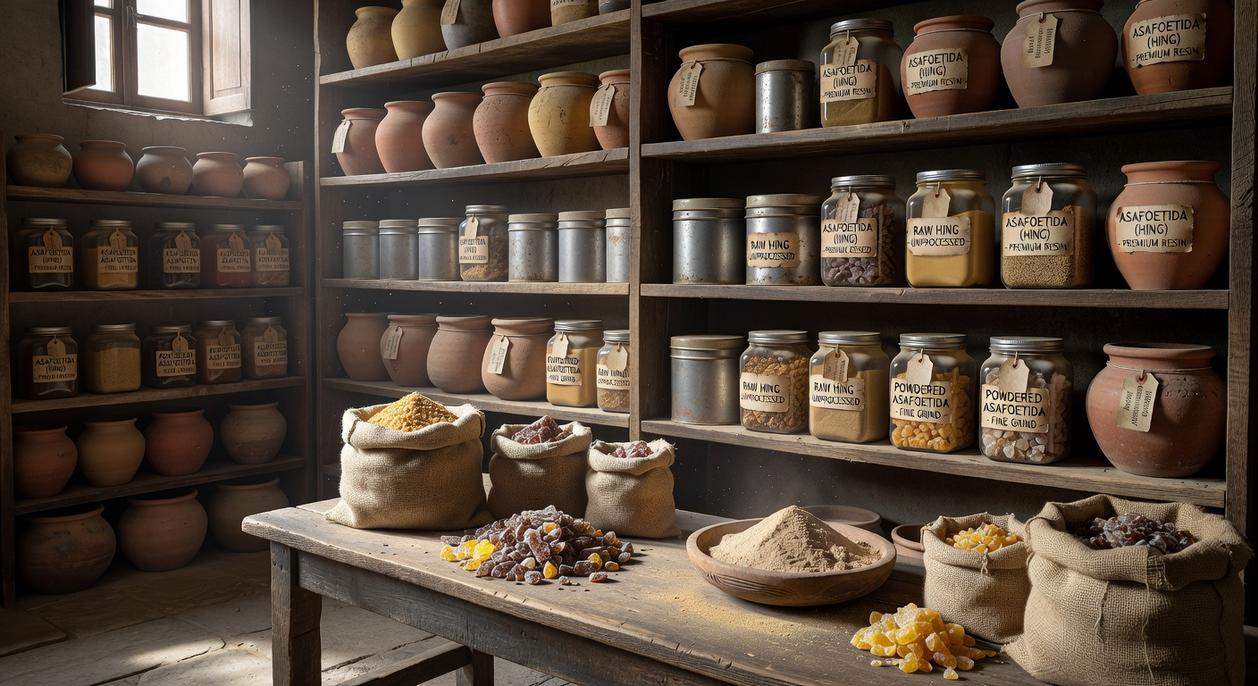
The Ideal Spot
The best place to store asafoetida properly is a cool, dark, and dry cabinet—preferably one far from your stove, oven, or dishwasher. Heat and light degrade volatile compounds (the aromatic chemicals responsible for its bold flavor), while humidity encourages clumping. A pantry shelf in an airtight container works beautifully. Think of asafoetida like ground coffee: once exposed to warmth and air, it loses its punch.
To Refrigerate or Not?
Refrigeration sounds smart in theory—cooler temperatures slow flavor loss. However, every time you open the jar, condensation can form inside, introducing moisture. Over time, that moisture leads to hard lumps or spoilage. If you do refrigerate, double-seal the container and let it return to room temperature before opening (pro tip: patience prevents condensation mishaps).
The Freezer Debate
Freezing is effective for long-term storage of lump resin, especially in bulk. But powders are trickier. Moisture buildup during thawing can ruin texture and potency. Only freeze if you won’t access it often, and always thaw fully before opening.
Good storage preserves flavor, making dishes like those in pairing hinga with lentils vegetables and grains shine with their intended depth and aroma.
A Form for Every Function: Storing Resin, Powder, and Paste
Not all asafoetida is created equal. Lump resin, compounded powder, and paste each behave differently in your kitchen—and in storage.
Lump Resin (Pure Asafoetida)
Think of this as the “hard candy” version. It’s dense, concentrated, and naturally stable. Wrap it in plastic wrap or foil before sealing it in an airtight glass jar to prevent sticking (trust me, it clings like caramel on a hot pan). This extra layer keeps its powerful aroma contained.
Compounded Powder (Hing)
This flour-mixed form is convenient but moisture-sensitive. Even slight humidity can cause clumping. Store it in a completely dry container, away from steam or stovetops. If resin is the marathon runner, powder is the sprinter—effective but less durable.
Asafoetida Paste
Often sold in plastic tubs, paste benefits from being transferred into a small, airtight glass jar after opening. Glass resists odor absorption and extends freshness.
To store asafoetida properly, match the method to the form—because one-size-fits-all rarely works in the spice world.
The Top 3 Mistakes That Ruin Asafoetida’s Potency
Mistake 1: Using the flimsy bag it comes in. Transport packaging is for shipping, not STORAGE. Bag-on-shelf vs airtight jar: A leaks aroma, B locks in volatile oils (the flavor magic).
Mistake 2: Parking it beside the stove. Heat today, cool tomorrow—repeat. Countertop-by-burner vs cool, dark cabinet: A accelerates breakdown, B preserves punch. (Think sunburn for spices.)
Mistake 3: Introducing moisture with a wet spoon. Damp scoop vs dry spoon: A clumps and molds, B stays. If you want to use store asafoetida properly, keep it DRY and SEALED to prevent spoilage properly.
From pungent problem to powerhouse flavor, you now have the complete toolkit to solve both odor contamination and flavor loss. The core solution is simple: transfer your hing into a clean, airtight glass or stainless-steel container and keep it in a cool, dark cabinet. This setup blocks air, repels moisture, and shields light, the three enemies that dull its sulfur-rich aroma. Airtight seals mean no kitchen-wide smell, while opacity preserves volatile compounds responsible for depth in dals and curries. Take five minutes to store asafoetida properly now, and every future dish will bloom with full, balanced flavor. Right now, please.
Keep Your Asafoetida Fresh and Flavorful
You came here to understand how to handle asafoetida the right way—and now you know exactly how to protect its powerful aroma, preserve its potency, and avoid wasting this essential ingredient. When not stored correctly, its strong scent can fade or contaminate other spices, leaving you frustrated and your dishes lacking that authentic depth.
The key is simple: store asafoetida properly in an airtight container, away from heat and moisture, and ideally double-sealed to protect both the spice and your pantry. This small step makes a big difference in flavor, freshness, and overall cooking results.
Don’t let improper storage ruin your culinary efforts. If you want more practical kitchen hacks, flavor insights, and cultural food guidance trusted by passionate home cooks, explore our latest guides today and elevate every dish you create.