The kitchen is the heart of the home—but too often, it feels more like a source of stress than inspiration. Cluttered counters, overstuffed cabinets, and misplaced tools can turn even the simplest meal into a frustrating task. This article delivers a clear, step-by-step system to bring lasting order to your space, no matter its size. With practical, proven kitchen organization tips, you’ll save time, reduce food waste, and rediscover the joy of cooking. Instead of quick fixes, we’ll guide you toward a streamlined, intuitive workflow inspired by how the most efficient kitchens truly function.
The Essential First Step: A Ruthless Declutter
Before you buy new bins or label makers, start with the “empty and edit” method. In other words, pull everything out of one cabinet or drawer at a time. This keeps the task manageable and prevents that what-have-I-done moment halfway through.
Next, set up three clear piles: Keep, Donate/Toss, and Relocate (for items that wandered in from other rooms). As you sort, ask yourself a few honest questions: Have I used this in the last year? Is it broken or expired? Do I have a duplicate? If the answer stings a little, that’s usually your clue.
Pay special attention to common clutter culprits. Expired spices lose potency over time (the USDA notes ground spices typically last 2–3 years). Mismatched food container lids multiply like rabbits. Single-use gadgets—looking at you, avocado slicer—rarely earn their space. And chipped dishware? It’s not charming; it’s a hazard.
Admittedly, some people argue that keeping extras “just in case” saves money. However, overcrowded cabinets waste time and hide what you actually use. Thoughtful kitchen organization tips begin with less, not more. Start small, finish one drawer, then build momentum. Then repeat the process throughout your entire kitchen this week.
The Zone Method: Arranging Your Kitchen for a Natural Flow
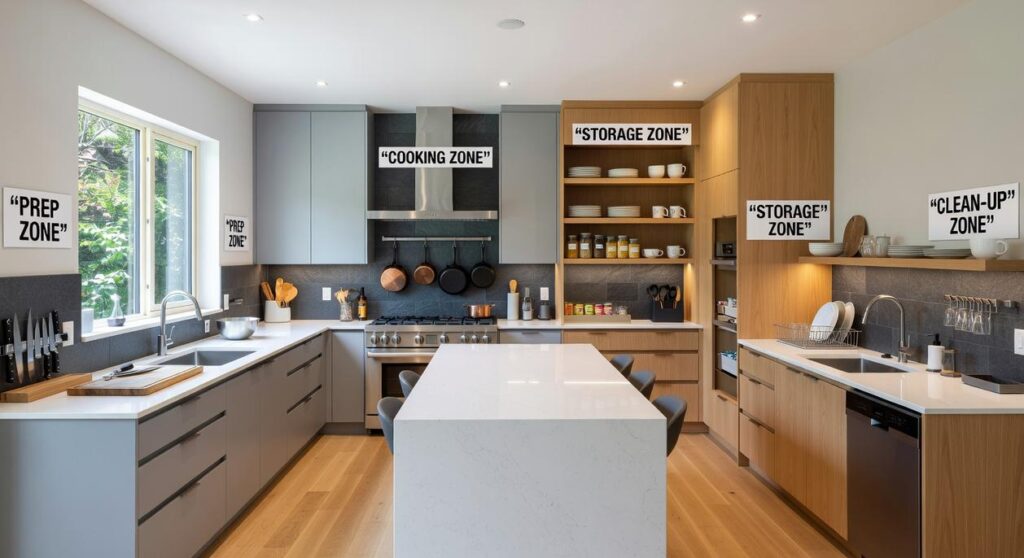
The Zone Method is simple: group items by function so your kitchen works like a series of mini workstations. Instead of scattering tools across random drawers, you create purposeful areas that mirror how you actually cook. Think of it like setting up levels in a cooking game—each station unlocks the next step (minus the dramatic soundtrack).
The Five Essential Kitchen Zones
1. The Prep Zone
Place this near your largest clear counter space. Store cutting boards, knives, mixing bowls, measuring cups, oils, and everyday spices here. If you chop it, mix it, or season it, it belongs here.
Step-by-step: Clear one drawer and one cabinet closest to your prep counter. Relocate all prep tools into those spaces. Keep only daily-use items within arm’s reach.
2. The Cooking Zone
Center this zone around your stove and oven. Keep pots, pans, baking sheets, spatulas, tongs, and ladles nearby. Install a small container for upright utensil storage if drawer space is tight. (No one wants to cross the kitchen mid-sauté.)
3. The Consumables Zone
This includes your pantry and refrigerator. Group like with like: grains together, canned goods together, baking supplies together. Label shelves if needed. These kitchen organization tips reduce food waste because you actually see what you own.
4. The Cleaning Zone
Under the sink is prime real estate for dish soap, sponges, trash bags, and cleaning sprays. Use bins to separate supplies so leaks don’t spread.
5. The “Put-Away” Zone
Store everyday dishes, glasses, and silverware in cabinets near the dishwasher. Pro tip: unload directly into these cabinets to save steps and time.
Organizing by zones creates a natural workflow: prep, cook, serve, clean, reset. It’s practical, efficient, and surprisingly calming.
Smart Storage Hacks to Maximize Every Inch
Ever open a cabinet and have a lid avalanche crash onto your head? Or dig through a drawer searching for a measuring spoon that seems to have entered witness protection? Small kitchens can feel like they’re working against you. The good news: you don’t need a renovation—just smarter strategy.
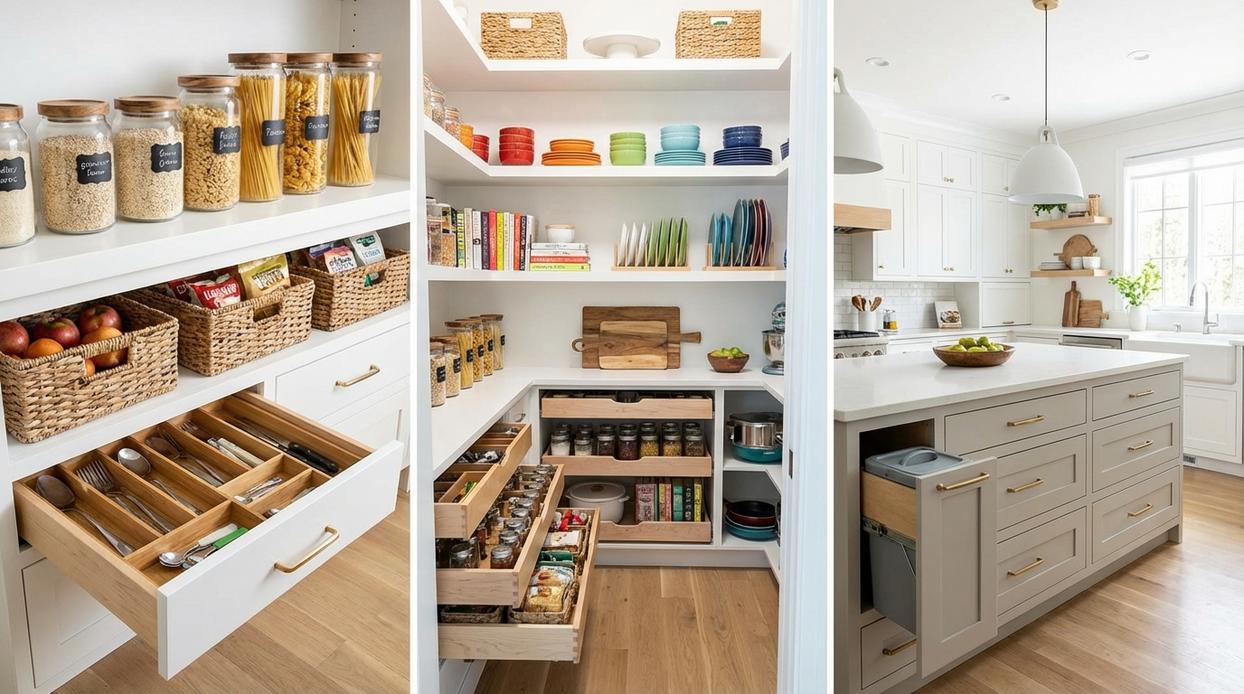
First, think vertically. Shelf risers inside cabinets instantly double your storage for plates and mugs. Stackable pantry containers do the same for dry goods. When you build upward, you stop wasting precious airspace (which, last time we checked, doesn’t hold cereal very well).
Next, utilize “dead” space. Install a ceiling rack for pots and pans, mount a magnetic knife strip on the wall, or add hooks inside cabinet doors for measuring spoons. Those overlooked inches add up fast. Some argue hanging items out in the open looks cluttered. Fair point. But done intentionally, it can feel like a chef’s kitchen—think less chaos, more cooking show set.
Then, divide and conquer. Drawer dividers keep utensils, spices, and gadgets from turning into a jumbled mess. It’s one of those kitchen organization tips that seems obvious—until you realize how much time you waste rummaging.
Embrace clarity by decanting flour, sugar, and pasta into clear, airtight containers. You’ll see inventory at a glance and keep food fresher (the USDA notes airtight storage helps extend shelf life of dry goods).
Finally, tame awkward corners with a Lazy Susan. No more forgotten cans hiding in the back.
And if weeknights still feel chaotic, try these 10 time saving kitchen hacks for busy weeknights to streamline your routine even further.
Small Shifts, Big Calm
The ‘One-Touch’ Rule: Put an item away in its designated home immediately after use, rather than setting it on the counter ‘for later’.
The 5-Minute Reset: Before bed, take five minutes to wipe counters, load any remaining dishes into the dishwasher, and put away stray items.
Your Kitchen, Reimagined for Ease and Enjoyment
You set out to create a kitchen that feels calm, functional, and enjoyable—and now you have a practical framework to make that happen. By organizing in zones, you’ve addressed the real frustration: no more wasting time searching for tools or ingredients. Instead, your space supports a smooth, intuitive cooking flow. That’s why these kitchen organization tips work—they align with how you naturally move and prepare meals, turning chaos into clarity.
Don’t wait for the “perfect” time. Start with just one drawer today. That small win can spark momentum and transform your entire kitchen into a space that truly works for you.