
If you’re searching for practical, proven ways to keep herbs fresh longer, you’re likely tired of watching vibrant cilantro, basil, or parsley wilt just days after bringing them home. Fresh herbs elevate any dish with color, aroma, and depth—but without the right storage methods, they quickly lose their flavor and texture.
This article is designed to give you clear, actionable techniques to extend the life of your herbs, reduce food waste, and preserve their natural oils and nutrients. We break down the science behind moisture control, airflow, and temperature so you understand not just what works—but why it works.
To ensure accuracy, we’ve reviewed culinary best practices, consulted professional kitchen standards, and referenced food preservation research. Whether you’re a home cook or an avid food enthusiast, you’ll find simple strategies here to protect your herbs and maximize their freshness in every meal.
Stop Tossing Your Greens: The Secret to Vibrant Herbs That Last
You buy a gorgeous bunch of cilantro, use three sprigs, and suddenly it’s a SLIMY SCIENCE EXPERIMENT. We’ve all been there (RIP, parsley).
This guide solves that heartbreak with simple, kitchen-tested tricks to keep herbs fresh longer—turning days into weeks. That means less waste, more flavor, and fewer guilt trips when you open the fridge.
Some say, “Just buy dried.” Sure… and while we’re at it, let’s replace fresh basil with confetti.
| Herb Type | Best Storage |
|———–|————–|
| Soft (cilantro) | Jar + loose bag |
| Hardy (rosemary) | Damp towel wrap |
Pro tip: Trim stems before storing—they drink water like tiny divas.
The Two Families of Herbs: Why One Storage Method Doesn’t Fit All
I learned this the hard way after ruining a gorgeous bunch of basil and a sturdy bundle of rosemary in the same drawer. At first, herbs seem interchangeable, but they actually fall into two structural families: tender, soft-stemmed herbs and hardy, woody-stemmed herbs.
Soft herbs like parsley, cilantro, dill, mint, and basil have delicate leaves and pliable stems that crave consistent moisture. Think of them as the rom-com leads of your crisper: dramatic and quick to wilt.
By contrast, hard herbs such as rosemary, thyme, oregano, sage, and marjoram grow tough, woody stems and smaller, resilient leaves. They resist drying out and prefer airflow over humidity.
Once I separated them and adjusted their environments, I could keep herbs fresh longer with far less waste. In short, understanding structure is the core storage principle. Treat them differently, always. Please.
The Bouquet Method: Treat Soft Herbs Like Fresh Flowers
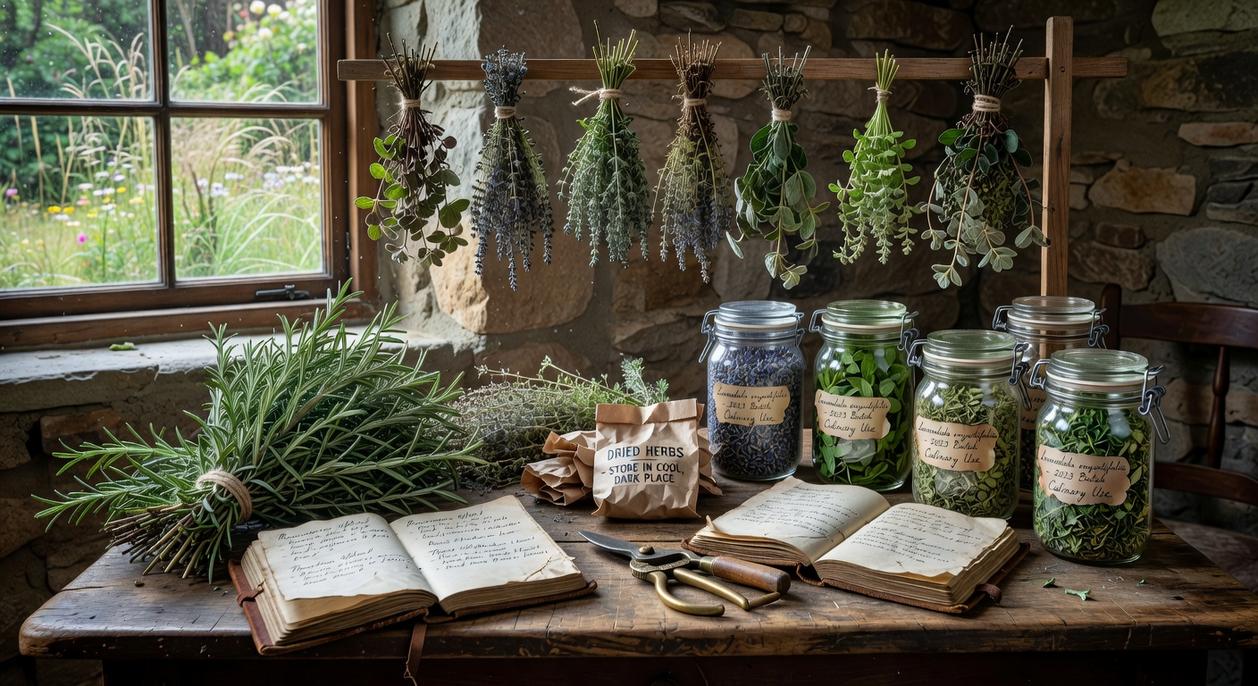
Soft herbs like cilantro, parsley, mint, and dill aren’t fragile—they’re just misunderstood. If you’ve been tossing them into the crisper drawer and hoping for the best, it’s time for a BETTER WAY.
Step 1: Prep the Herbs
Start by trimming the very bottom of the stems (about ½ inch), just like you would with a fresh flower bouquet. This opens the stems so they can absorb water efficiently. If any leaves are slimy or bruised, remove them. Think of it as editing—only the good stuff stays.
Step 2: The Water Jar
Place the trimmed herbs upright in a jar or glass with about an inch of cool water. The stems should sit in water, but the leaves must stay above the waterline. Submerged leaves turn mushy fast (and no one wants parsley soup).
Step 3: Cover Loosely
Gently drape a loose plastic bag or reusable produce bag over the leaves. This creates a mini-greenhouse effect—humidity stays in, excess moisture escapes. It’s simple science: controlled moisture prevents wilting while reducing rot.
Step 4: Refrigerate
Store the jar in the refrigerator and change the water every few days. This method can keep herbs fresh longer—often up to two weeks with proper care.
Pro tip:
- Don’t overcrowd the jar. Airflow matters.
- Refresh the stem cut every 4–5 days for best results.
Special Note on Basil
Basil is the exception. Cold temperatures damage its delicate cells, turning leaves black (chilling injury, according to postharvest studies). Keep basil at ROOM TEMPERATURE using the same bouquet method—just skip the fridge.
The Damp Towel Wrap: A Cozy Blanket for Hardy Herbs
If rosemary, thyme, oregano, and sage had a group chat, they’d all agree on one thing: they hate being soggy. These hardy herbs prefer a LIGHT hug of moisture—not a swamp. The damp towel wrap gives them just enough hydration to prevent shriveling while avoiding the dreaded rot (because nobody likes slimy sage).
The goal is simple: keep herbs fresh longer by balancing moisture and airflow. Think of it as climate control for your crisper drawer.
-
Lightly Dampen a Paper Towel
Moisten a paper towel, then wring it out thoroughly. It should feel cool and damp, not dripping. If it leaves puddles, it’s too wet. (Your herbs are not training for a pool party.) -
Wrap the Herbs
Lay the herbs in a single layer on the towel. Gently roll them up so they’re snug but not squished. Crushing them releases oils and speeds spoilage. -
Store Securely
Place the bundle in a sealed container or zip-top bag to prevent excess air exposure. -
Refrigerate
Keep it in the crisper drawer, where they can last two weeks or more.
Pro tip: Pair this method with smart knife care tips to extend blade life (https://hingagyi.com/smart-knife-care-tips-to-extend-blade-life/) for a kitchen that’s sharp in every sense.
Preserving Peak Flavor: The Ice Cube Tray Hack
When your garden explodes with basil or the market deal is too good to pass up, long-term storage becomes essential. Rather than watching herbs wilt in the fridge, freezing them in oil locks in volatile flavor compounds—those delicate aromatic molecules that give rosemary its piney punch. Compared with freezing plain leaves, oil acts as a barrier against oxidation, so you keep herbs fresh longer and brighter tasting.
First, chop the herbs finely; smaller pieces expose more surface area, meaning better flavor release later. Next, tightly pack them into ice cube tray compartments, filling each about two-thirds full. Then, pour olive oil or a splash of water over the top until covered. Freeze until solid; patience here prevents crumbly cubes.
Once frozen, pop them out and store in a labeled freezer bag. Unlike most guides, consider blending herb-specific ratios—thyme with garlic, cilantro with lime zest—for ready-made flavor bases. Drop a cube directly into soups, stews, or sauces; it melts like culinary time travel. Pro tip: use silicone trays for effortless release and cleaner edges.
For even deeper flavor, warm the oil gently before pouring, intensifying aroma without cooking the herbs. Think ahead always. That’s smart.
Your Kitchen, Now Fresher for Weeks
You searched for a real fix to wilting herbs, and here it is. Wasting money and flavor on slimy cilantro or limp parsley stops now. By controlling moisture with breathable containers and separating soft herbs like basil from hard herbs like rosemary, you create ideal storage conditions. Specifically, trim stems, add a damp towel for soft varieties, and store hard stems wrapped loosely. Therefore, you keep herbs fresh longer without expensive gadgets. Next time you shop, try these steps and taste the difference for weeks. Fresh flavor, zero waste. Your meals will thank you.
Keep Your Herbs Vibrant and Flavorful Every Day
You came here looking for simple, reliable ways to keep herbs fresh longer—and now you have practical techniques to protect their flavor, aroma, and texture. From proper storage methods to smart trimming and moisture control, you’re equipped to stop tossing out wilted, lifeless greens before you ever get to use them.
There’s nothing more frustrating than reaching for fresh herbs only to find them soggy or dried out. Wasted ingredients mean wasted money—and dull flavors in the dishes you worked so hard to prepare. With the right approach, that problem disappears.
Now it’s time to put these tips into action. Start applying these storage hacks today and transform the way your kitchen handles fresh ingredients. For more trusted kitchen strategies, flavor guides, and culinary insights designed to elevate every meal, explore our latest resources and discover why so many home cooks rely on us for practical, proven advice. Your herbs—and your taste buds—will thank you.