

Running out of eggs mid-recipe—or choosing not to use them at all—can feel like a baking disaster. But if you’re searching for reliable egg substitutes for baking, you’re in the right place. Whether you’re dealing with dietary restrictions, allergies, rising grocery costs, or simply an empty carton in the fridge, this guide is designed to help you swap confidently without sacrificing texture, structure, or flavor.
In this article, you’ll discover practical, kitchen-tested alternatives that actually work in cakes, cookies, muffins, and more. We break down which substitutes are best for binding, leavening, or adding moisture—so you get consistent results every time.
Our recommendations are grounded in culinary fundamentals, global cooking traditions, and extensive hands-on kitchen testing to ensure accuracy and reliability. By the end, you’ll know exactly which egg substitutes for baking to use—and when—to keep your recipes delicious and dependable.
Ever found the perfect cake recipe only to realize it hinges on eggs? It’s frustrating. Whether you’re managing allergies, eating vegan, or cooking for a crowd with mixed needs, you shouldn’t have to skip brownies or cookies. In my view, great baking should be inclusive.
So, what’s the fix? First, understand why eggs matter:
- Structure (they bind ingredients).
- Moisture (they hydrate and tenderize).
- Lift (they trap air for rise).
Once you grasp that, you can confidently Use egg substitutes for baking based on function, not guesswork. Honestly, a little food science changes everything. It truly empowers bakers.
The Secret Roles of Eggs in Baking
Eggs are culinary multitaskers. Before replacing them, identify their primary job in your recipe. That clarity changes everything.
1. Binding
When heated, egg proteins coagulate (meaning they firm up), creating structure. In cookies, this holds flour, sugar, and butter together so they don’t crumble apart. If you’re testing egg substitutes for baking, ask: does this recipe rely on eggs to keep its shape? For brownies, a flax “egg” often works because it mimics that binding effect.
2. Leavening
Whipped eggs trap air, expanding in the oven for lift. Think sponge cakes or meringues (cloud-like and dramatic, like a baking show finale). If volume matters, aquafaba whipped to stiff peaks is a practical swap.
3. Moisture & Richness
Yolks add fat, flavor, and tenderness; whites contribute water. In quick breads, yogurt can replace that moisture.
4. Emulsifying
Eggs blend fat and water smoothly, crucial in custards and mayonnaise. Without them, mixtures may separate—so whisk thoroughly and add liquids gradually.
For Structure & Binding: How to Hold It All Together
When your batter needs backbone—not just moisture—this is where structure steps in. Binding agents are the unsung heroes of dense, sturdy baked goods. Without them, muffins crumble, brownies fall apart, and cookies spread like they’ve given up (we’ve all been there).
Let’s compare your best egg substitutes for baking side by side so you can choose with confidence.
1. Flax Egg vs. Chia Egg
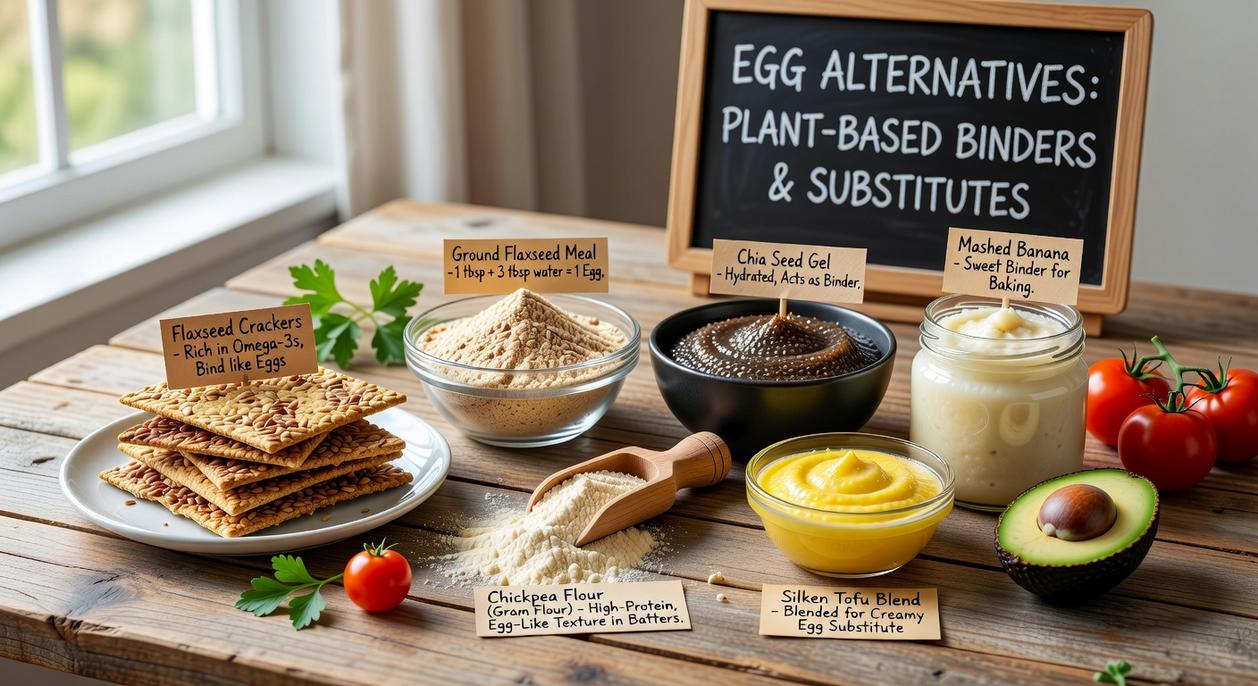
Both rely on the same simple ratio: 1 tablespoon seeds + 2.5 tablespoons water. For a flax egg, use ground flaxseed. After a few minutes, it forms a gelatinous texture—think loose jam—that mimics the binding power of eggs. It’s ideal for muffins, pancakes, brownies, and cookies where you want structure without extra texture.
Chia eggs follow the same ratio: 1 tablespoon chia seeds + 2.5 tablespoons water. They gel similarly, but the seeds remain more visible. That slight crunch works beautifully in quick breads and whole-grain recipes. If flax is smooth and subtle, chia is hearty and noticeable (like choosing smooth peanut butter over chunky).
3. Mashed Fruit: Banana vs. Applesauce
Use 1/4 cup per egg. Mashed banana adds body and sweetness—great for dense cakes, muffins, and brownies. Applesauce offers moisture with a milder flavor.
Pro Tip: Because fruit adds natural sugars and liquid, reduce other liquids or sugar slightly to keep textures balanced.
Some argue fruit can’t truly “bind.” Fair—but in dense recipes, its pectin and fiber create enough cohesion to hold everything together. The key is matching the substitute to the structure you need.
For Lift & Airiness: Achieving the Perfect Rise
When a recipe calls for a cloud-like texture, structure and lift matter most. The right swap can mean the difference between a dense puck and a bakery-worthy crumb (we’ve all had that hockey-puck muffin moment).
Substitute 1: Aquafaba
Aquafaba is the liquid from a can of chickpeas. It’s often called a “miracle” ingredient because it mimics egg whites when whipped, thanks to its protein and starch content that trap air.
Ratio: 3 tablespoons aquafaba = 1 egg
Best for: Meringues, macarons, mousses, angel food cake
How to whip to stiff peaks:
- Drain liquid into a clean bowl.
- Use an electric mixer on medium-high.
- Whip 5–10 minutes until glossy, stiff peaks form (they should stand upright when you lift the beaters).
Pro tip: Add a pinch of cream of tartar to stabilize the foam.
Substitute 2: Chemical Leaveners
This method relies on a chemical reaction: baking soda + acid creates carbon dioxide bubbles, giving batter lift.
Ratio: 1 teaspoon baking soda + 1 tablespoon vinegar (or lemon juice) = 1 egg
Best for: Cakes, cupcakes, quick breads
Mix the baking soda into dry ingredients and the acid into wet, then combine quickly and bake immediately for maximum rise.
These egg substitutes for baking are especially helpful when turning family recipes into healthier alternatives (https://hingagyi.com/turning-family-recipes-into-healthier-alternatives/).
For Moisture & Richness
When you remove egg yolks, you lose fat—the component that gives baked goods a tender crumb (that soft, delicate interior). In my experience, the smartest fix is choosing egg substitutes for baking that restore richness rather than just structure.
First, plant-based yogurt. Use unsweetened, plain varieties at 1/4 cup per egg. Because it contains cultured fats and proteins, it keeps cakes, cupcakes, and muffins moist instead of crumbly. I find it especially reliable for vanilla sponge.
Next, silken tofu, blended until smooth, at 1/4 cup per egg. Silken simply means higher water content, which creates a creamy, neutral base. It shines in cheesecakes, custards, and dense brownies.
Finally, nut butter—3 tablespoons per egg. Almond or cashew butter adds body and subtle flavor, perfect for cookies and brownies. Some argue fruit purées are lighter; however, I prefer these richer swaps for depth and structure overall in baking.
Your Go-To Egg Replacement Cheatsheet
With this quick guide, you now have everything you need to master egg substitutes for baking. The real challenge was never just swapping ingredients—it was understanding what the egg actually does in a recipe. Is it binding? Leavening? Adding moisture? Once you match the function, the fix becomes simple (almost obvious, honestly).
I’ve found that most baking flops happen when we ignore that detail. An egg isn’t magic—it’s chemistry. And when you respect the role, the results follow.
Quick-Reference Guide:
- For Brownies & Muffins (Binding): Use a Flax Egg or Applesauce.
- For Light & Fluffy Cakes (Leavening): Use Baking Soda + Vinegar.
- For Meringues & Mousse (Whipping): Use Aquafaba.
- For Rich Moist Cakes (Fat/Moisture): Use Plant-Based Yogurt.
Personally, I think flax eggs are the most reliable place to start (they rarely disappoint).
Now you’re ready. Pull out that recipe you’ve been wanting to try and start baking with confidence.
Bring Confidence Back to Your Kitchen
You came here looking for reliable answers about egg substitutes for baking, and now you have them. Whether you’re out of eggs, managing allergies, or experimenting with plant-based options, you’ve seen that great texture, flavor, and structure are still completely within reach.
Baking mishaps are frustrating. Sunken cakes, dry muffins, or cookies that spread too thin can waste time and ingredients. But when you understand how each substitute works, you take control of your results instead of leaving them to chance.
Now it’s your move. Choose the substitute that fits your recipe, test it with confidence, and start creating baked goods that taste just as good—if not better—than the original. If you want more practical kitchen-tested tips and globally inspired cooking insights, explore our latest guides and put your next recipe on the path to success. Join thousands of home cooks who trust our expertise—your best bake yet is just one smart swap away.
 Zayric Orlandis is the kind of writer who genuinely cannot publish something without checking it twice. Maybe three times. They came to recipe adaptation ideas through years of hands-on work rather than theory, which means the things they writes about — Recipe Adaptation Ideas, Global Food Fundamentals, Hinga Flavors and Traditions, among other areas — are things they has actually tested, questioned, and revised opinions on more than once.
That shows in the work. Zayric's pieces tend to go a level deeper than most. Not in a way that becomes unreadable, but in a way that makes you realize you'd been missing something important. They has a habit of finding the detail that everybody else glosses over and making it the center of the story — which sounds simple, but takes a rare combination of curiosity and patience to pull off consistently. The writing never feels rushed. It feels like someone who sat with the subject long enough to actually understand it.
Outside of specific topics, what Zayric cares about most is whether the reader walks away with something useful. Not impressed. Not entertained. Useful. That's a harder bar to clear than it sounds, and they clears it more often than not — which is why readers tend to remember Zayric's articles long after they've forgotten the headline.
Zayric Orlandis is the kind of writer who genuinely cannot publish something without checking it twice. Maybe three times. They came to recipe adaptation ideas through years of hands-on work rather than theory, which means the things they writes about — Recipe Adaptation Ideas, Global Food Fundamentals, Hinga Flavors and Traditions, among other areas — are things they has actually tested, questioned, and revised opinions on more than once.
That shows in the work. Zayric's pieces tend to go a level deeper than most. Not in a way that becomes unreadable, but in a way that makes you realize you'd been missing something important. They has a habit of finding the detail that everybody else glosses over and making it the center of the story — which sounds simple, but takes a rare combination of curiosity and patience to pull off consistently. The writing never feels rushed. It feels like someone who sat with the subject long enough to actually understand it.
Outside of specific topics, what Zayric cares about most is whether the reader walks away with something useful. Not impressed. Not entertained. Useful. That's a harder bar to clear than it sounds, and they clears it more often than not — which is why readers tend to remember Zayric's articles long after they've forgotten the headline.