
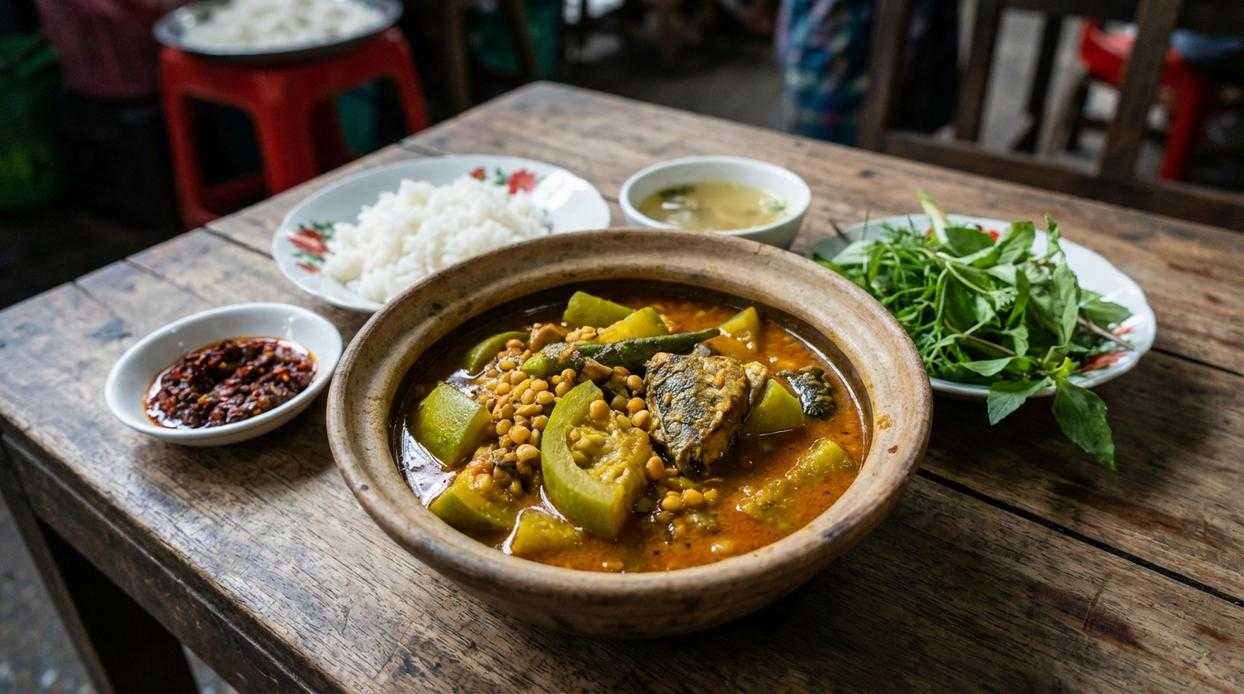
I’ve been fascinated by Burmese cuisine for years, and hingagyi might be the most underrated dish I’ve encountered.
You’ve probably heard about Thai curries or Vietnamese pho. But hingagyi? This sour curry is Burma’s best-kept secret, and most people outside Myanmar have never even tasted it.
Here’s what makes it special: hingagyi builds its flavor on tamarind and fish, creating this tangy depth that’s completely different from what you expect in a curry. It’s comfort food that wakes up your palate.
I wanted to understand why this dish matters so much in Burmese culture. So I dug into traditional cooking methods and talked to people who grew up eating it.
This guide breaks down everything you need to know about hingagyi. What it is, why it tastes the way it does, and how the flavors work together.
You’ll learn the cultural context that makes this more than just another recipe. And yes, I’ll show you how to make it in your own kitchen with ingredients you can actually find.
No shortcuts or watered-down versions. Just the real thing.
What is Hingagyi? The Heart of a Burmese Meal
I’ll never forget the first time I sat down to a proper Burmese meal.
There were at least seven dishes spread across the table. Rice in the center. Fried fish on one side. Pickled vegetables on the other. But what caught my attention was this bowl of broth that didn’t look like any curry I’d seen before.
No coconut milk. No thick gravy.
Just this clear, tangy liquid with chunks of fish swimming in it. That was hingagyi.
Hingagyi is a Burmese curry, but not the kind you’re probably picturing. It’s built around a sour and savory broth that cuts through everything else on your plate. While other curries in the region lean on coconut milk for richness, this one goes a different direction entirely.
Think of it as the palate cleanser that also happens to be the main dish.
In Myanmar, this food named hingagyi serves a specific purpose. When you’re eating a spread of oily curries and fried sides (which is most meals), you need something to balance it all out. That’s where this comes in.
It’s comfort food, sure. But it’s also functional.
Now here’s what makes it interesting. The protein changes depending on where you are. Fish in coastal areas. Chicken or pork inland. Sometimes you’ll see it with bamboo shoots or other vegetables.
But no matter what goes into the pot, that sour and aromatic base stays the same. It’s what makes hingagyi recognizable whether you’re eating it in Yangon or a village up north.
That consistency matters when you’re talking about a dish that shows up at family tables across an entire country.
The Flavor Profile: A Symphony of Sour, Spicy, and Savory
Most curries you know follow a pattern.
Thai curries lean on coconut and lemongrass. Indian curries build complexity through spice blends. Japanese curries go sweet and mild.
But hingagyi in myanmar? It plays by different rules.
I’m talking about a flavor system that doesn’t fit the mold you’re used to. And that’s exactly what makes it work.
The Sour Foundation (Chin-bat)
Here’s where hingagyi separates itself from other curries. That bright, mouth-puckering tartness comes from tamarind (magyi thee). It wakes up your palate instead of weighing it down.
Compare that to the richness of a coconut-based Thai curry. One coats your tongue. The other cuts through and makes you want another bite.
The Savory Depth (Ngan-bat)
This is the backbone. Ngapi (fermented fish or shrimp paste) delivers that deep umami punch you can’t get from soy sauce or fish sauce alone.
Think of it this way. Miso gives you savory sweetness. Ngapi gives you savory funk. Both work, but they take you to completely different places.
Aromatic Heat (Sat-bat)
Fresh and dried chilies bring the fire. But garlic, shallots, and turmeric? They build layers underneath.
It’s not just heat for heat’s sake (looking at you, vindaloo). The aromatics give context to the spice.
When you balance these three pillars right, you get something that doesn’t taste like anything else in your rotation.
The Essential Pantry: Gathering Your Hingagyi Ingredients
You can’t make Hingagyi without the right ingredients.
I know that sounds obvious. But I’ve seen people try to shortcut this step and wonder why their soup tastes nothing like what they had in Yangon.
Here’s what you actually need.
Start with your protein. Fish is traditional. Pork works too. I’ve made it with chicken when that’s what I had on hand. If you’re going vegetarian, chickpeas give you that hearty texture you want (though purists will definitely have opinions about this).
Tamarind is non-negotiable. This is your sour agent. You need tamarind pulp or concentrate. No substitutes here. The tangy depth it brings? That’s what makes hingagyi in Myanmar taste like hingagyi.
Some people say you can skip the ngapi and just use fish sauce. They’ll tell you fermented shrimp paste is too hard to find or too pungent.
But that’s missing the point. This ties directly into what we cover in Which Milkweed for Hingagyi.
Ngapi gives you that fermented umami punch that defines the whole dish. Without it, you’re making sour soup. Not hingagyi. If you absolutely can’t find it, mix fish sauce with a bit of miso. It’s not perfect, but it gets you closer than fish sauce alone.
Your aromatics matter. Garlic, shallots, ginger, and turmeric powder. These build your flavor base.
For heat, you’ll want both dried red chilies and fresh green ones. Different heat profiles that work together.
Vegetables are flexible. Gourd, drumstick pods, eggplant. Use what you can find.
Most Asian grocery stores carry tamarind and ngapi. If you’re shopping online, search for “Myanmar ingredients” or “Burmese cooking supplies.”
The ingredients aren’t exotic for the sake of being exotic. Each one serves a specific purpose in how many minutes to cook hingagyi. Get them right and the rest follows.
A Step-by-Step Guide to Making Authentic Hingagyi

Have you ever tasted something so good that you immediately wanted to know how it was made?
That’s what happened to me the first time I had real hingagyi in Myanmar.
The sour hit you first. Then the heat. Then this deep, almost earthy flavor that I couldn’t quite place. It was nothing like the watered-down versions I’d tried before.
I knew I had to learn how to make it myself.
Some people will tell you that authentic Burmese cooking is too complicated for home cooks. That you need special equipment or ingredients you can’t find. That it’s better to just order takeout.
But here’s what they don’t understand.
The beauty of hingagyi isn’t in fancy techniques or hard-to-find ingredients. It’s in the process. In taking your time with each step and letting the flavors build naturally.
I’m going to walk you through exactly how I make it. No shortcuts. No substitutions that compromise the taste.
Just the real method that works every single time.
Step 1: Preparing the Base
You start with tamarind water.
Take a golf ball-sized piece of tamarind pulp and soak it in warm water for about 10 minutes. Work it with your fingers until it dissolves. Strain out the seeds and fibers. What you’re left with is this tangy, slightly thick liquid that forms the backbone of the curry.
Tamarind Tip: I keep a jar of tamarind concentrate in my fridge. Mix one tablespoon with half a cup of water and you’re done in 30 seconds. No mess, no straining.
While that’s sitting, you pound your aromatics.
Garlic, shallots, dried chilies, and ngapi (fermented fish paste) go into a mortar. Pound them until you get a rough paste. It doesn’t need to be smooth. You want some texture.
Does your arm get tired? Yes. Is it worth it?
Absolutely.
A Deeper Flavor: Pre-made curry pastes save time but they miss something. When you pound fresh aromatics, you release oils that just aren’t there in jarred versions. The difference in taste is real.
Step 2: Building the Flavor
This is where most people mess up.
Heat oil in a pot until it shimmers. Add your pounded paste and fry it. Not for 30 seconds. Not until it “looks done.”
You fry it until the oil separates and rises to the surface. We call this hsi that in Burmese. It means the oil has “returned.”
You’ll smell it before you see it. The raw garlic smell disappears and gets replaced by something warm and fragrant. The paste darkens slightly and stops bubbling as much.
This step usually takes 8 to 10 minutes on medium heat.
Skip this and your curry tastes flat. Do it right and you get that depth that makes you go back for seconds.
Step 3: Simmering the Curry
Add your protein now. Fish works great. So does chicken or pork.
Stir it around in that fragrant oil for a minute. Then pour in your tamarind water.
Bring it to a boil, then drop the heat to low. Let it simmer uncovered for 20 to 30 minutes. The liquid will reduce and thicken. The protein will get tender. The flavors will come together.
You’ll know it’s ready when the oil pools on the surface again and the sauce coats the back of a spoon.
Kitchen Hacks for Perfection
Balancing Act: Taste your curry in the last five minutes of cooking. Too sour? Add a pinch of sugar or a splash of fish sauce. Too salty? Squeeze in more tamarind or add a bit of water. Not spicy enough? Stir in some chili oil.
The goal is balance. Sour, salty, and spicy should all be there but none should dominate.
I usually taste it three or four times before I’m happy with it (and yes, I burn my tongue every single time).
Here’s the thing about how to make hingagyi step by step. It’s not about following a recipe word for word. It’s about understanding what each step does and why it matters.
Once you get that? You can make this curry in your sleep.
How to Serve and Enjoy Hingagyi Like a Local
You can’t eat hingagyi in myanmar the way you’d eat soup back home.
I mean, you could. But you’d miss the whole point.
Here’s what I do every time I sit down with a bowl.
Start With Rice
Get yourself a plate of hot steamed rice. Not a small side portion. A REAL plate.
The broth needs somewhere to go. And trust me, you want every drop of that soup soaking into your rice.
Some people say you should eat the soup separately and keep your rice plain. They think mixing everything together is messy or improper.
But that’s not how locals do it.
The whole experience comes from building each bite. A little rice. A bit of the tender meat. Some of that rich broth. That’s where the magic happens.
I always add a fresh vegetable salad on the side. Maybe some crispy fritters if I’m feeling hungry. A plate of raw vegetables and herbs rounds it out.
You don’t need fancy plating or complicated sides. Just fresh ingredients that balance the richness of the soup.
Here’s the thing about eating this way. You’re not supposed to finish one dish at a time. Take a little from everything. Mix it with your rice. Let the flavors talk to each other.
That’s how you eat like you mean it.
Bringing the Taste of Myanmar to Your Table
You’ve probably never heard of hingagyi.
Most people haven’t. But this dish sits at the heart of Myanmar’s food culture.
I want to show you what makes hingagyi special. The sour notes that wake up your palate. The savory depth that keeps you coming back. The way it connects generations of cooks who’ve perfected these flavors.
This isn’t some complicated recipe that requires impossible ingredients. Hingagyi is approachable once you understand what you’re working with.
You came here curious about a dish that felt out of reach. Now you know its story and the flavors that define it. We explore this concept further in How Many Minutes to Cook Hingagyi.
Time to Cook
Gather your ingredients and start cooking. The soulful combination of sour and savory is waiting in your kitchen.
Hingagyi isn’t just food. It’s a window into Myanmar’s culinary traditions, and you’re about to experience it firsthand.
 There is a specific skill involved in explaining something clearly — one that is completely separate from actually knowing the subject. Brianskier Fowlerosa has both. They has spent years working with culinary pulse in a hands-on capacity, and an equal amount of time figuring out how to translate that experience into writing that people with different backgrounds can actually absorb and use.
Brianskier tends to approach complex subjects — Culinary Pulse, Cultural Cuisine Explorations, Global Food Fundamentals being good examples — by starting with what the reader already knows, then building outward from there rather than dropping them in the deep end. It sounds like a small thing. In practice it makes a significant difference in whether someone finishes the article or abandons it halfway through. They is also good at knowing when to stop — a surprisingly underrated skill. Some writers bury useful information under so many caveats and qualifications that the point disappears. Brianskier knows where the point is and gets there without too many detours.
The practical effect of all this is that people who read Brianskier's work tend to come away actually capable of doing something with it. Not just vaguely informed — actually capable. For a writer working in culinary pulse, that is probably the best possible outcome, and it's the standard Brianskier holds they's own work to.
There is a specific skill involved in explaining something clearly — one that is completely separate from actually knowing the subject. Brianskier Fowlerosa has both. They has spent years working with culinary pulse in a hands-on capacity, and an equal amount of time figuring out how to translate that experience into writing that people with different backgrounds can actually absorb and use.
Brianskier tends to approach complex subjects — Culinary Pulse, Cultural Cuisine Explorations, Global Food Fundamentals being good examples — by starting with what the reader already knows, then building outward from there rather than dropping them in the deep end. It sounds like a small thing. In practice it makes a significant difference in whether someone finishes the article or abandons it halfway through. They is also good at knowing when to stop — a surprisingly underrated skill. Some writers bury useful information under so many caveats and qualifications that the point disappears. Brianskier knows where the point is and gets there without too many detours.
The practical effect of all this is that people who read Brianskier's work tend to come away actually capable of doing something with it. Not just vaguely informed — actually capable. For a writer working in culinary pulse, that is probably the best possible outcome, and it's the standard Brianskier holds they's own work to.